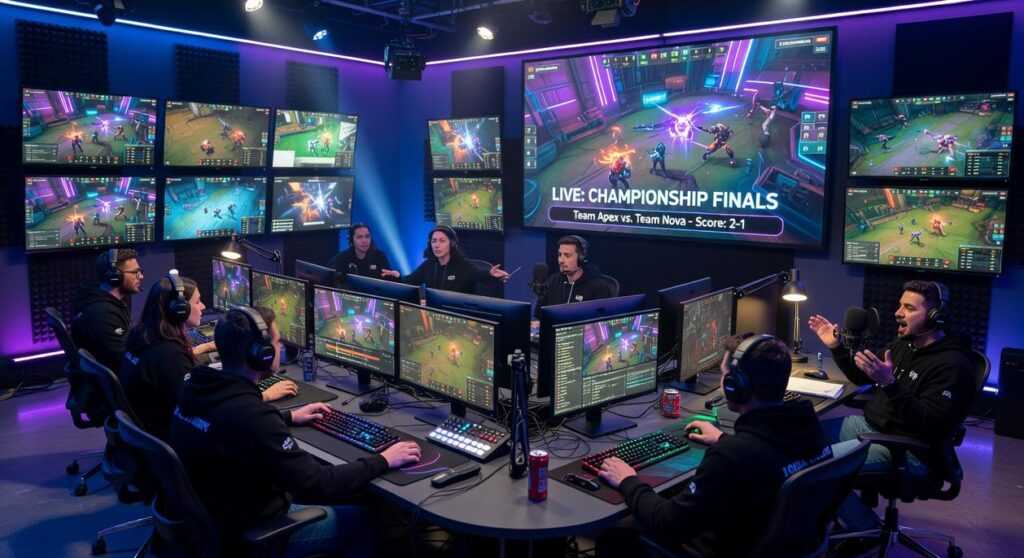
Esports is moving faster than ever, and if you’re here, you want to understand where competitive gaming is headed and how it affects the way you play, watch, or compete. From shifting tournament formats to prize pool expansions and franchise leagues, the landscape is constantly evolving. This article breaks down the key developments driving esports tournament evolution, highlighting what’s changing, why it matters, and how it impacts players, teams, and fans alike.
We’ve analyzed recent tournament structures, competitive rule changes, and performance data across major titles to give you a clear, up-to-date perspective. Instead of surface-level commentary, you’ll get focused insights into emerging trends, strategic adaptations in competitive play, and the growing influence of technology and sponsorships on the scene.
Whether you’re an aspiring competitor, a dedicated fan, or simply looking to stay ahead of industry shifts, this guide delivers the clarity and context you need to navigate today’s esports environment with confidence.
From Arcades to Arenas: The Unlikely Rise of Competitive Gaming
Remember when competitive gaming meant quarters stacked on arcade cabinets and bragging rights at basement LAN parties? Today, it fills arenas with roaring fans and multi million dollar prize pools.
How did that leap happen?
This deep dive maps the core mechanics, broadband breakthroughs, and strategic mindsets behind esports tournament evolution, tracing a path from pixelated duels to global leagues.
Along the way, we will explore:
- streaming platforms as talent pipelines
- data analytics as playbooks
Prediction: expect virtual reality stages and AI coaches to redefine competition within a decade. Speculatively.
The Pioneer Era: LAN Parties and Early Competitions (1980s–1990s)
Before packed arenas and million-dollar prize pools, competitive gaming began with a handful of Stanford students in 1972. The “Intergalactic Spacewar Olympics” is widely recognized as the first organized video game competition. The prize? A year’s subscription to Rolling Stone. Humble—but historic. It proved that digital skill could be measured, ranked, and celebrated.
Fast forward to the arcade boom of the 1980s. High-score chasing in Pac-Man and Donkey Kong wasn’t just bragging rights; it was asynchronous competition—players battling for leaderboard dominance without facing each other directly. Twin Galaxies formalized this culture by verifying scores and standardizing rules (a foundational step many retrospectives gloss over). In many ways, this was the first scalable competitive infrastructure.
Then came the LAN party revolution. With Doom and later Quake, real-time multiplayer transformed isolated score attacks into direct combat. For the first time, reflexes, map control, and mechanical precision clashed live in the same room. This shift laid critical groundwork for esports tournament evolution.
Importantly, the Cyberathlete Professional League (CPL), founded in 1997, didn’t just host events—it standardized brackets, anti-cheat rules, and prize pools reaching $15,000 (CPL archives). That structure legitimized competition beyond hobbyist gatherings.
Some argue modern esports truly began in the 2000s. Yet without these grassroots systems, today’s competitive ecosystem—and its strategic depth—wouldn’t exist. For deeper context, explore this overview of esports history.
The Broadcast Boom: South Korea and the Dawn of Televised Esports (2000s)

I still remember watching grainy StarCraft: Brood War clips online and thinking, “Wait… they’re playing this in sold-out stadiums?” That disbelief was common in the early 2000s. Yet in South Korea, it wasn’t strange at all—it was prime time.
So what happened? First, the South Korean catalyst. After the Asian Financial Crisis, the government invested heavily in broadband infrastructure. By the early 2000s, high-speed internet was everywhere. Pair that with PC bangs (internet cafés where gamers played for hours), and you had a perfect ecosystem. StarCraft: Brood War—fast-paced, balanced, and endlessly replayable—became a national obsession. A “meta” (the most effective strategies at a given time) evolved weekly, keeping fans hooked like a K-drama cliffhanger.
Then came OnGameNet (OGN). And this changed everything.
OGN treated players like professional athletes—complete with commentators, sponsorships, and roaring crowds. The term “pro-gamer” stopped sounding ironic. It meant salaried contracts, team houses, and fan clubs. (Yes, fan clubs.) Some critics argued this was hype over substance—“It’s just a video game,” they’d say. But television legitimized competition in a way forums never could.
Meanwhile, Western Expansion took shape through Major League Gaming (MLG). Instead of PC cafés, North America rallied around consoles, especially Halo. I attended a local MLG stop in 2007, and the energy felt electric—trash talk, team jerseys, and brackets taped to walls.
Finally, The Prize Pool Evolution cemented esports tournament evolution. What began as winning hardware and bragging rights turned into six-figure payouts. Pro tip: follow the prize money—where it grows, infrastructure follows. Suddenly, “going pro” wasn’t a punchline. It was a career path.
The Streaming Revolution: Twitch and the Global Audience (2010s)
The Accessibility Game-Changer
When Twitch launched in 2011, it didn’t just create a platform—it removed the paywall. Before Twitch, watching competitive gaming often meant hunting down shaky streams or attending events in person. Suddenly, anyone with a stable internet connection could watch elite players compete for free. By 2014, Twitch had over 55 million monthly users (Twitch press data), proving that global demand for live esports was massive. Some critics argued that free access would limit revenue growth. Yet ad models, subscriptions, and sponsorships quickly demonstrated that scale beats scarcity (just ask YouTube’s business model).
The MOBA Explosion
Games like League of Legends and Dota 2 rode this wave perfectly. Riot’s 2019 World Championship reached over 100 million unique viewers (Riot Games data), rivaling traditional sports broadcasts. Streaming didn’t just show matches; it built personalities, narratives, and year-round hype. This period marked a defining phase in esports tournament evolution, where online qualifiers and regional leagues fed global championships. If you’re curious how competitive ladders fueled this ecosystem, see how ranked systems shape competitive multiplayer games.
- Free global access accelerated fan growth
- Streamer personalities built loyalty
- Publishers reinvested in larger prize pools
Crowdfunding the Dream
Valve’s Dota 2 Compendium (later Battle Pass) let fans directly fund The International. In 2021, the prize pool exceeded $40 million (Valve data). Players weren’t just spectators—they were stakeholders.
The Rise of Franchised Leagues
Franchised systems like the OWL and LCS introduced city-based teams and multimillion-dollar buy-ins. Supporters claimed stability would attract sponsors. Skeptics warned it might limit grassroots growth. The jury’s still out—but the structure undeniably brought esports closer to the NFL model (with more mouse clicks and fewer shoulder pads).
Competitive gaming is no longer niche. Luxury fashion houses, automotive giants, and global banks now sponsor major leagues, while media rights deals on platforms like YouTube and Twitch mirror traditional sports contracts (Newzoo, 2024). Collegiate programs across North America offer scholarships, turning ranked ladders into real career paths.
Mobile esports is EXPLODING in Southeast Asia and Latin America, where affordable smartphones and 5G access fuel massive prize pools and viewership.
Looking ahead:
• IMMERSIVE VR/AR arenas promise deeper fan engagement.
• PLAYER HEALTH initiatives prioritize burnout prevention and longevity.
This esports tournament evolution signals a STRUCTURAL shift toward sustainable competition.
The journey from pixelated arcade cabinets to sold-out arenas proves one thing: this is more than a high score. What began as local bragging rights transformed through widespread internet access, streaming platforms, and community passion into a global spectacle. The esports tournament evolution didn’t happen by accident; technology lowered barriers while culture raised expectations. If you want to stay competitive, study emerging leagues, invest in reliable gear, and watch live broadcasts on platforms like https://example.com to understand meta shifts. Some argue esports is a bubble, but infrastructure investments and franchise models suggest otherwise. Pro tip: follow grassroots scenes early today.
Level Up Your Competitive Edge
You came here to understand how modern competitive gaming is changing—and now you have a clearer view of the strategies, systems, and esports tournament evolution shaping today’s scene. From shifting meta dynamics to smarter gear optimization and high-level competitive play, you’re better equipped to adapt instead of falling behind.
The real pain point for most players isn’t lack of passion—it’s falling short because they don’t have the right insights. In competitive gaming, small knowledge gaps lead to big losses. When you don’t understand evolving mechanics or tournament structures, you’re always reacting instead of dominating.
Now it’s your move. Start refining your strategies, optimize your setup, and stay locked in on emerging esports trends before your competition does. Follow the latest breakdowns, apply the tactics in your next match, and keep sharpening your edge.
Thousands of competitive players rely on expert-backed insights to stay ahead of the meta. Don’t let outdated strategies cost you wins—dive deeper, upgrade your approach, and start competing at the level you know you’re capable of today.