

Competitive gaming is evolving at a pace few players can afford to ignore. Whether you’re looking to sharpen your mechanics, understand shifting metas, or stay ahead of esports trends, this article delivers a clear breakdown of what matters right now—and how it impacts your performance. From core gameplay systems to advanced strategy adjustments, we focus on the insights that directly influence ranked climbs, tournament preparation, and smarter gear optimization.
One of the biggest developments reshaping the scene is collegiate esports growth, which is creating new talent pipelines, scholarship opportunities, and structured competitive ecosystems. Understanding how this expansion affects scouting, practice standards, and meta development gives serious players a measurable edge.
Our analysis draws on up-to-date tournament data, gameplay metrics, and competitive scene monitoring to ensure accuracy and relevance. If you’re aiming to compete smarter, adapt faster, and optimize every aspect of your setup, this guide is built to help you stay ahead of the competition.
Once, college gaming meant late-night dorm sessions and cold pizza. Today, it means packed arenas, scholarships, and salaried coaches reviewing footage like it’s March Madness.
So what changed?
Parents and players alike wonder whether this path is stable or hype. The data tells a story. Programs now offer:
- Structured practice schedules
- Academic eligibility standards
- Dedicated performance facilities
This isn’t a club; it’s an ecosystem. Universities report enrollment, sponsorship revenue, and STEM crossover opportunities tied to collegiate esports growth (Newzoo 2024).
Critics argue esports lacks longevity compared to traditional athletics. Fair point. Yet schools mitigate risk through conference governance, media rights deals, and transferable skills training in broadcasting, analytics, and coding.
The real advantage? Career pipelines into gaming, tech, and media—fields expanding faster than legacy industries.
Why Now? The Driving Forces Behind the Esports Boom
Esports used to be dismissed as a dorm-room hobby. Critics argued it lacked the physicality and discipline of “real” sports. But legitimacy has shifted. Major tournaments fill arenas, attract million-dollar prize pools, and draw global audiences that rival the NBA Finals (yes, really).
Some skeptics still say the boom is hype, fueled by Twitch streams and flashy sponsors. Yet technology tells a different story. High-speed internet, affordable high-performance PCs, and stable platforms like Steam and Riot’s clients have created frictionless competitive ecosystems. Organized brackets, anti-cheat systems, and global matchmaking make skill-based play scalable.
Then there’s the professional pipeline. Titles like League of Legends, Valorant, and Overwatch offer structured paths from ranked ladders to collegiate teams to franchised leagues. That mirror to traditional sports development systems strengthens collegiate esports growth and signals long-term stability.
Most importantly, student demand is undeniable. Incoming freshmen grew up grinding ranked matches after school; competition and community are baked into their social lives. Universities that ignore this shift risk looking outdated. This isn’t a fad. It’s infrastructure, culture, and expectation converging at once. The momentum feels permanent, not temporary spectacle. For competitive institutions.
• CAPS
•
•
More Than Just a Game: Tangible Benefits for Student-Athletes
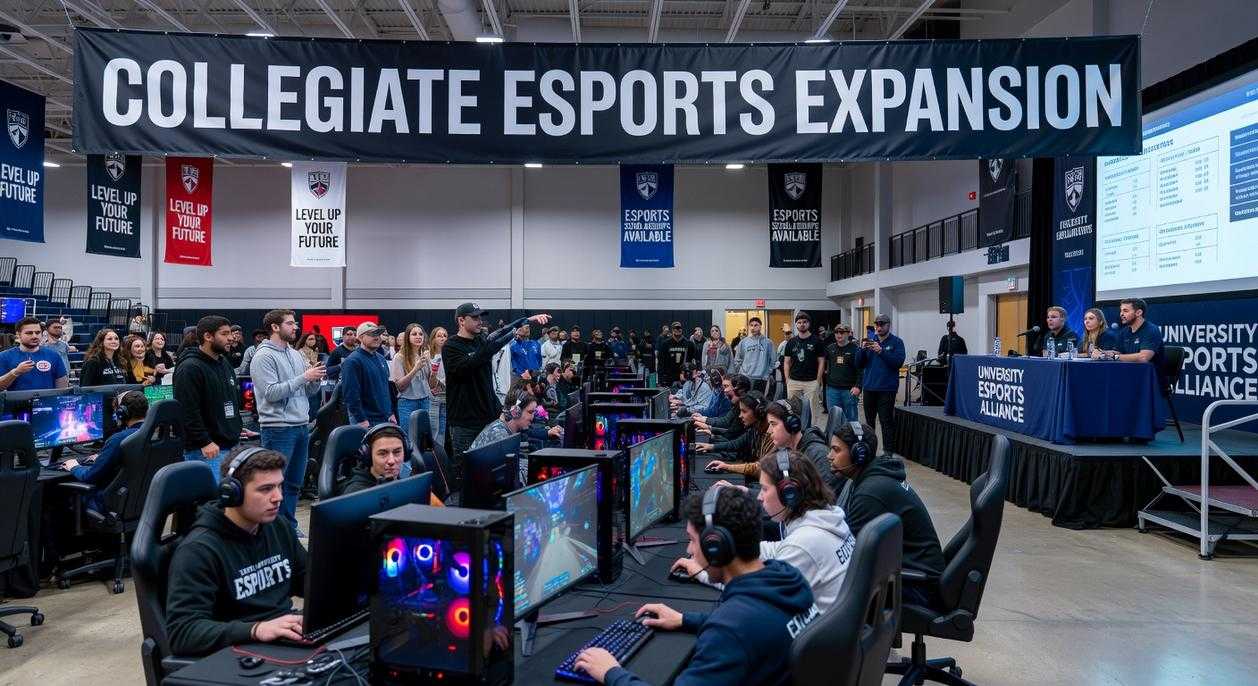
For years, competitive gaming was treated like a hobby you’d “grow out of.” But today, it functions more like a modern-day varsity sport—complete with scholarships, structured teams, and real career pathways. Think of it as chess meets the NBA, streamed live.
Financial Opportunities
Esports scholarships range from partial tuition waivers to full rides, lowering the financial barrier to higher education. As collegiate esports growth accelerates, more universities are investing in programs to attract talented players (National Association of Collegiate Esports). For some students, competitive gaming becomes the bridge to college—like a digital-era athletic draft.
Skill Development
Competitive play sharpens more than reflexes. It’s a pressure cooker that forges transferable skills:
- Strategic thinking (reading opponents like a grandmaster anticipates moves)
- Teamwork and role clarity
- Communication under pressure
- Data analysis and performance review
Scrimming before a tournament mirrors corporate project cycles—review footage, identify weaknesses, optimize strategy. (Yes, it’s basically a startup sprint with headsets.)
Career Pathways
Not everyone goes pro—and that’s the point. Esports programs are ecosystems. Around every team stands a network of roles: broadcast production, marketing, event coordination, coaching, analytics, and team management. It’s less like a single lane highway and more like a bustling city with multiple career streets.
Community and Belonging
For many students, joining a team transforms isolation into identity. Structured competition builds school pride and shared purpose. Instead of playing alone in a dorm room, students compete under a banner—connected, supported, and seen.
More than just a game? It’s a launchpad disguised as a leaderboard.
A Strategic Win: How Universities Benefit from Esports Programs
Universities once debated whether esports belonged on campus. Now, many are asking a different question: How fast can we build a competitive program? The answer often ties directly to enrollment, funding, and long-term brand relevance.
Student Recruitment and Enrollment
A well-structured esports program acts as a modern recruitment engine. Today’s applicants grew up with competitive gaming as a mainstream activity (yes, it’s as normal as Friday night football for many). Offering scholarships, dedicated arenas, and structured leagues signals that the university understands student interests. According to the National Association of Collegiate Esports (NACE), participation in collegiate esports growth has steadily increased year over year, reflecting rising student demand. For admissions teams, that translates into broader applicant pools and stronger yield rates.
STEM Engagement
Esports isn’t just playing games—it’s an applied STEM lab. Students in computer science analyze game engines. Digital media majors manage broadcasts using tools tied to spectator modes and streaming in esports (https://rogrand525.com/spectator-modes-and-streaming-in-esports/). Business students handle sponsorship analytics. This interdisciplinary crossover turns abstract coursework into hands-on experience (which, frankly, boosts retention).
Alumni and Donor Engagement
Gaming-savvy alumni are often eager to mentor teams or fund tech upgrades. Corporate sponsors—from hardware manufacturers to software firms—also see campuses as prime branding opportunities. That creates diversified revenue streams beyond tuition.
Brand Modernization
Critics argue esports is a fad. Yet universities embracing it position themselves as forward-thinking institutions aligned with digital culture. In a competitive higher-ed market, that perception alone can be a strategic edge.
Universities love to tout esports as the future, but the reality is messier. High upfront costs for arenas, high-end PCs, and networking infrastructure can rival small athletic facilities. Meanwhile, qualified coaches—people who understand both game theory and student development—are scarce. Add in the lack of a single governing body like the NCAA, and policy becomes a patchwork.
Still, contrary to skeptics, collegiate esports growth isn’t a bubble. If anything, consolidation is coming. Expect standardized rules, conference-based leagues, and tighter integration with computer science and business curricula. The schools that treat esports as academics, not marketing, will win. Long-term success depends.
Finding Your Role in the Collegiate Esports Arena
As collegiate esports growth accelerates, it’s fair to wonder whether this is a viable academic and career path. Yet, once you look closer, the benefits become clear. Universities now offer scholarships, training, and access to industry recruiters, turning late-night ladder matches into résumé-ready experience.
Moreover, competitive play builds teamwork, communication, and strategic thinking—skills employers actively seek. Instead of gaming being “just a hobby,” it becomes a launchpad for careers in tech, media, marketing, and beyond. So, research programs, connect with campus teams, and map your strengths to real-world opportunities. Level up here.
Level Up Your Competitive Edge
You came here to better understand the evolving landscape of esports, from shifting metas to gear optimization and the rapid rise of collegiate esports growth. Now you have a clearer view of how competitive play is changing—and what it takes to stay ahead.
The reality is simple: the skill ceiling keeps rising. Players who ignore strategy refinement, mechanical mastery, and optimized setups fall behind fast. Whether you’re grinding ranked, competing on a campus team, or preparing for larger tournaments, the gap between average and elite comes down to preparation and informed decision-making.
Act on what you’ve learned. Test new strategies. Re-evaluate your loadouts and peripherals. Track competitive trends and adapt before your opponents do.
If you’re serious about winning more and climbing faster, don’t leave your performance to guesswork. Get proven strategies, meta breakdowns, and gear optimization insights trusted by competitive players—then put them into action today.
 There is a specific skill involved in explaining something clearly — one that is completely separate from actually knowing the subject. Elizabeth Denmarkenico has both. They has spent years working with core gaming concepts and mechanics in a hands-on capacity, and an equal amount of time figuring out how to translate that experience into writing that people with different backgrounds can actually absorb and use.
Elizabeth tends to approach complex subjects — Core Gaming Concepts and Mechanics, Esports and Multiplayer Trends, Expert Insights being good examples — by starting with what the reader already knows, then building outward from there rather than dropping them in the deep end. It sounds like a small thing. In practice it makes a significant difference in whether someone finishes the article or abandons it halfway through. They is also good at knowing when to stop — a surprisingly underrated skill. Some writers bury useful information under so many caveats and qualifications that the point disappears. Elizabeth knows where the point is and gets there without too many detours.
The practical effect of all this is that people who read Elizabeth's work tend to come away actually capable of doing something with it. Not just vaguely informed — actually capable. For a writer working in core gaming concepts and mechanics, that is probably the best possible outcome, and it's the standard Elizabeth holds they's own work to.
There is a specific skill involved in explaining something clearly — one that is completely separate from actually knowing the subject. Elizabeth Denmarkenico has both. They has spent years working with core gaming concepts and mechanics in a hands-on capacity, and an equal amount of time figuring out how to translate that experience into writing that people with different backgrounds can actually absorb and use.
Elizabeth tends to approach complex subjects — Core Gaming Concepts and Mechanics, Esports and Multiplayer Trends, Expert Insights being good examples — by starting with what the reader already knows, then building outward from there rather than dropping them in the deep end. It sounds like a small thing. In practice it makes a significant difference in whether someone finishes the article or abandons it halfway through. They is also good at knowing when to stop — a surprisingly underrated skill. Some writers bury useful information under so many caveats and qualifications that the point disappears. Elizabeth knows where the point is and gets there without too many detours.
The practical effect of all this is that people who read Elizabeth's work tend to come away actually capable of doing something with it. Not just vaguely informed — actually capable. For a writer working in core gaming concepts and mechanics, that is probably the best possible outcome, and it's the standard Elizabeth holds they's own work to.